
A platform organised around advertising decisions
Marketing teams often work across advertising accounts, analytics, commerce and CRM systems. The challenge is not simply having more data; it is understanding which information supports the next action and whether its definitions are consistent. Pilar OS is the platform layer in our approach. The implementation starts with your business questions and source systems, then defines the relevant connections, views and workflows.
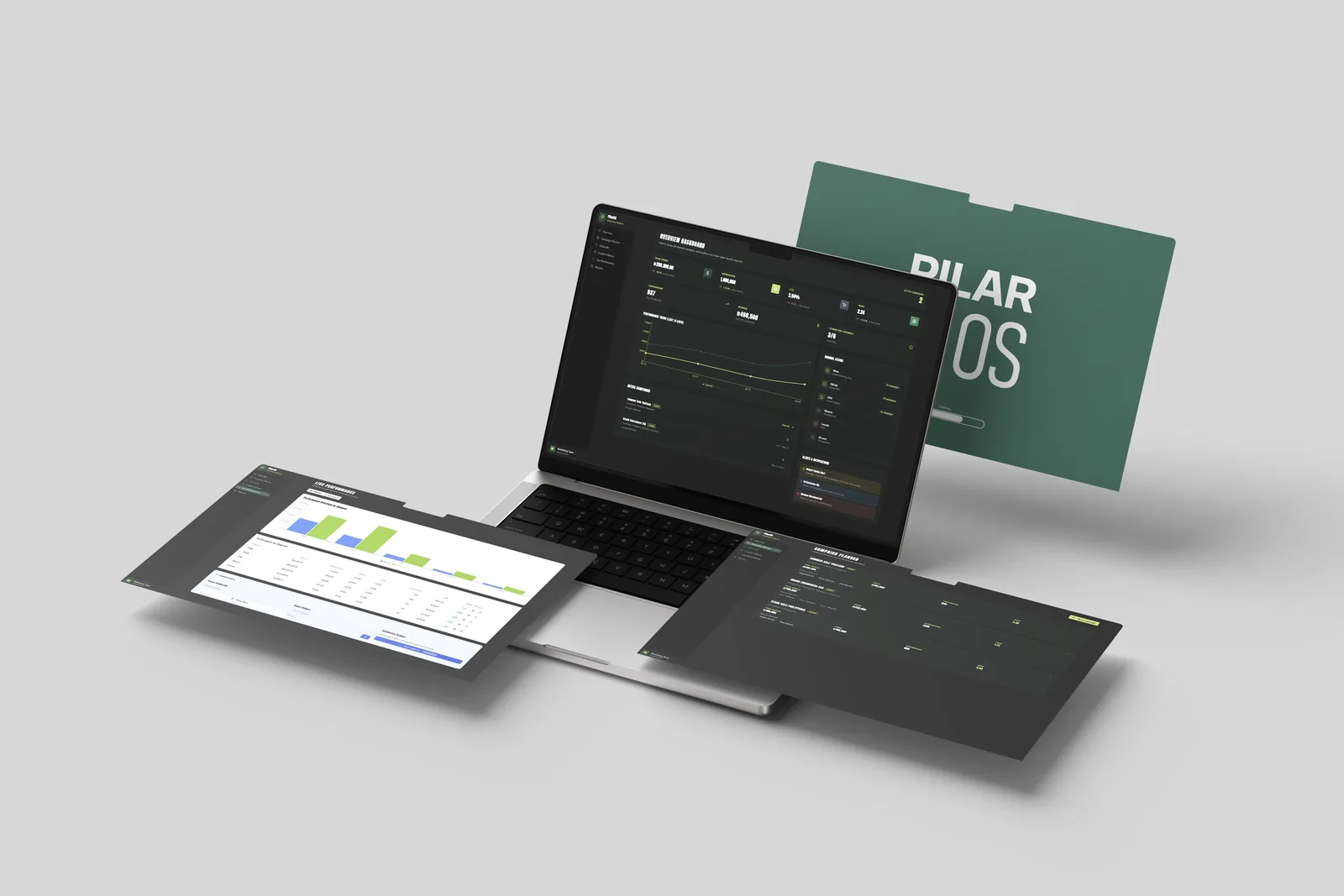
Pilar OS capabilities
Read what each capability is intended to address, the inputs it needs and the questions to resolve before implementation.
First Party Tracking
Understand what happens after someone visits your website or submits an enquiry. First-party tracking connects activity on your own properties with the business outcomes your team needs to measure.
Read moreModeled Attribution
Modeled attribution helps examine how marketing activity may contribute to an outcome. It combines available evidence with a defined method, so investment decisions can consider more than the final recorded touchpoint.
Read moreCentralized Analytics
Centralized analytics brings relevant marketing and business measures into a consistent view. It helps leadership, market teams and campaign operators discuss the same results without losing the detail each role needs.
Read moreAutomatic KPI Optimizations
Automatic KPI optimisation connects campaign feedback with an agreed business objective. The starting point is a reliable conversion signal, a clear operating scope and limits that your team can review.
Read moreMCP Integration
MCP—the Model Context Protocol—is a standard for connecting compatible AI applications with external context and tools. A useful integration starts with the specific information or action the application needs.
Read moreData Trust
Data Trust concerns the definitions, quality checks, ownership and access decisions behind marketing information. The aim is to make it clear what a report represents and who is responsible for maintaining it.
Read moreAI Creative Tools Integrations
AI creative tools can help a team explore concepts, adapt approved assets and prepare variations for testing. Their value depends on a clear brief and a review process that protects the product, the message and the brand.
Read moreFrom source information to a useful action
Keep the business objective visible throughout the workflow.
Collect and connect
Agree relevant events, source systems and outcome definitions. Identify the connections available and any gaps that require another process.
Interpret and review
Bring measures into a view appropriate to the decision. Explain differences, uncertainty and the context needed to assess the result.
Act with clear ownership
Assign the next action or investigation. Define which tasks are manual, which can be assisted and which may be automated within agreed limits.
Scope the platform with your team
Bring your current technology stack, reporting needs, access requirements and the people who own the underlying systems. Confirm supported connections and responsibilities before implementation. The platform scope and any media buying, creative production or development work should be clear in the engagement. Listing a technology in the directory does not imply every possible integration is included.
Browse Supported AdtechDiscuss your platform requirements
Tell us which decision or workflow is difficult today and which systems are involved.